
Arabic Calligraphy in Packaging Design: Heritage, Typography, and UAE Brand Signals
Kufic, Naskh, Diwani, Thuluth — when each Arabic script works on packaging, how to set bilingual lockups, and which print techniques respect the letterform.
Key Takeaways
- •Four calligraphic styles — Kufic, Naskh, Diwani, Thuluth — carry most of contemporary UAE packaging
- •Square Kufic scales cleanly from 6mm foils to metre-wide fixtures; Diwani rewards hot foil, punishes cheap printing
- •A commissioned bilingual lockup outperforms a translated wordmark measurably on recognition and recall
- •RTL pack layout affects opening mechanics, arrow direction, and ingredient-table column order — decide at brief, not press-check
4
dominant Arabic calligraphic styles in contemporary packaging: Kufic, Naskh, Diwani, Thuluth
2x
average brand-recognition lift when a commissioned bilingual lockup replaces a translated wordmark
Why Arabic Typography Matters Now
Arabic calligraphy has been the dominant visual art form of the region for a millennium, and UAE brands are finally treating it with the seriousness it deserves on packaging. The era of adding transliterated Latin type in a second colour under the brand is ending. A designed Arabic lockup, commissioned alongside the Latin one, is the baseline for any brand that takes the local market seriously.
The payoff is not decorative. A commissioned Arabic wordmark performs measurably better in recognition and recall among Arabic-first consumers than a translated one. On a rigid box, a folding carton, or a cosmetic label, the Arabic script is frequently the first thing the eye lands on — so it has to be at least as considered as the English.
The Four Styles and Where They Fit
Arabic calligraphy has many sub-styles, but four carry most of the load in contemporary packaging. Each speaks with a different voice, and misusing one is a tell.
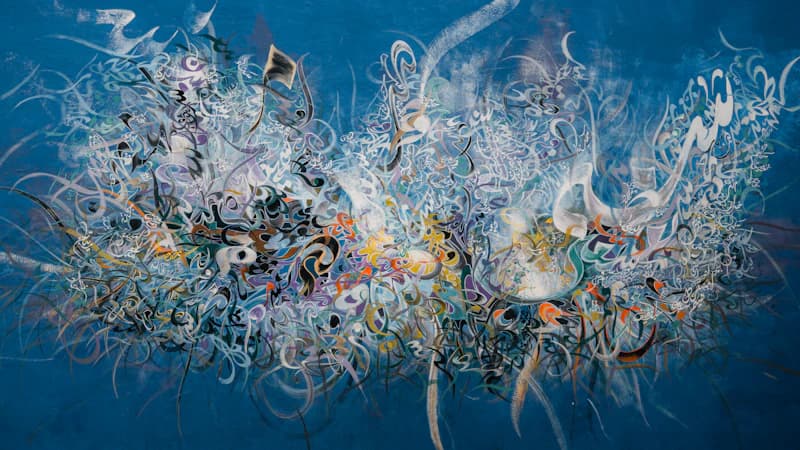
Commissioned calligraphy starts on paper — the brush stroke decisions that define the wordmark happen long before the vector file.
- •Kufic — geometric, angular, architectural. Reads as bold, contemporary, confident. The default for modern UAE brand identities and a strong match for minimal packaging.
- •Naskh — readable, workmanlike, the script of everyday publishing. Useful for long-form content on inserts and instruction panels, rarely the hero on a pack.
- •Diwani — flamboyant, cursive, Ottoman-royal. Reads as heritage and luxury — jewellery, fragrance, and gift packaging use it heavily.
- •Thuluth — the monumental script of architecture and Qur'anic chapter headings. Stately, formal. Works on heritage brands but easy to over-use.
Kufic for Modern Luxury
Modern Kufic is where the region's most confident contemporary brands have landed. The geometric rigour of Kufic lets a designer build a wordmark that sits alongside a sans-serif Latin mark without either feeling like an afterthought. The negative space becomes part of the brand — a detail foil-stamping, deboss, or laser-cut elements all reward.
Square Kufic in particular — where letters are constrained to a grid — produces packaging marks that read beautifully as a motif at any scale, from a 6mm foil on a sample vial to a metre-wide print on a retail fixture.
Diwani for Fragrance and Gifting
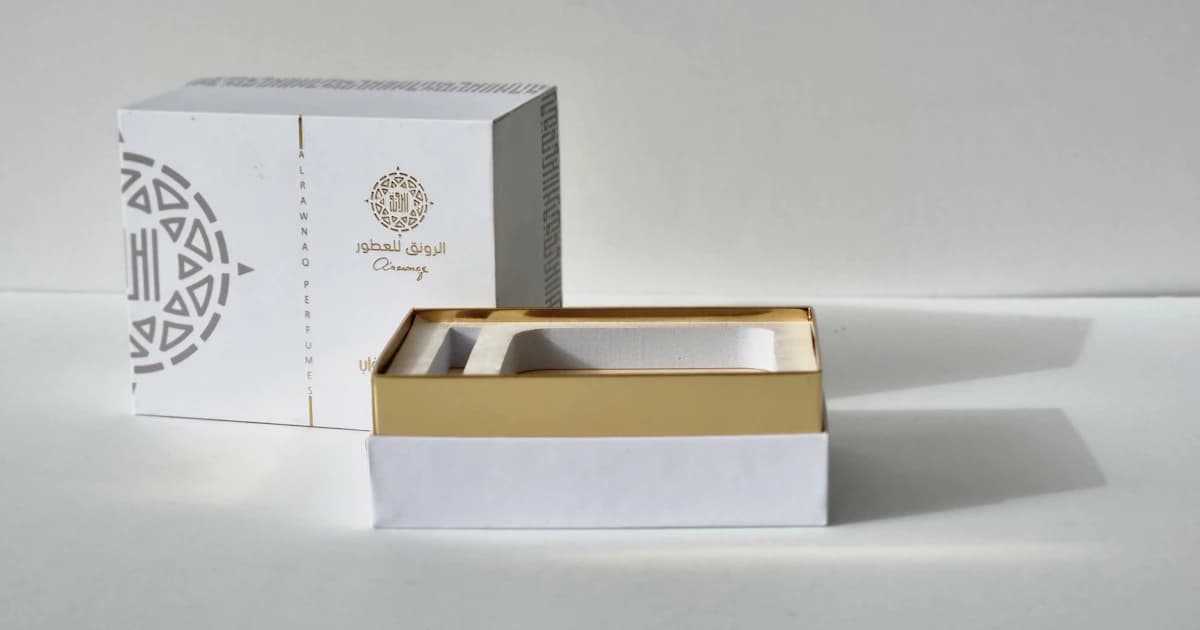
Diwani is where fragrance, dates, chocolates, and gifting brands reach instinctively. The flowing cursive strokes signal heritage and craftsmanship, and the script pairs comfortably with deep jewel colours — emerald, burgundy, ink — and with metallic foils.
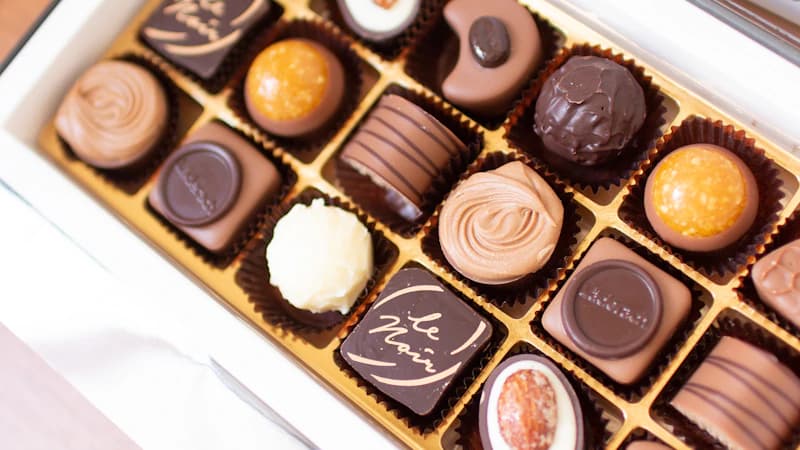
Embossed or foiled Diwani on a rigid chocolate outer reads instantly as premium-gifting — the style is part of the category's shelf shorthand.
The trap with Diwani is complexity. A bespoke Diwani wordmark has dense crossings and decorative flourishes that punish cheap printing. If a brand cannot afford hot foil and a clean substrate, Diwani is the wrong pick.
Bilingual Lockups: Designing the Pair
The failure mode of bilingual packaging is that one script feels primary and the other feels translated. A well-designed bilingual lockup gives both marks equal weight, matched x-heights, and a visual rhythm that reads from either side.
Lockup rules that travel:
- •Match the optical weight, not the font size — Arabic is vertically taller than Latin in most scripts, so optical matching beats mathematical matching.
- •Stack vertically on narrow packs (Arabic above, Latin below, or vice versa) rather than forcing a horizontal lockup that crushes both.
- •Choose one dominant colour. Two-colour lockups where Arabic and Latin are in different hues halve the impact of both.
- •Share a baseline motif — an underline, a dot, a frame — that ties the pair into one mark.
Printing Techniques That Respect the Script
Arabic script has fine diacritical marks (harakat) and delicate stroke terminations. Not every print technique preserves them cleanly. The decoration choice should come after the legibility test, not before.
- •Hot foil stamping — crisp on geometric Kufic; specify a high-tack foil with tight registration on Diwani flourishes.
- •Blind deboss — forgiving with small diacritics; use on uncoated or textured stock for a craft-press feel.
- •Screen print — delivers saturated colour but loses detail under 8-point; keep for bold Kufic only.
- •Digital foil — cost-effective for short runs and variable artwork, but less sharp on fine strokes than hot foil.
RTL Layout Pitfalls on Packaging
Arabic reads right-to-left, and the whole packaging surface should acknowledge that when the Arabic is primary. The back panel, the ingredient list, the directional cues on the outer sleeve — all of them read differently when the lead language is Arabic.
📋 Compliance Note
Front-of-pack for a bilingual market
- •Arrow and directional icons must flip with the script. An RTL pack with LTR arrows reads as broken.
- •Ingredient tables need column order reversed in the Arabic version, not just translated cell contents.
- •Opening mechanics — a book-style rigid box opens from the right on an RTL pack; specify this on the dieline, not after tooling.
- •Numbers stay Western Arabic on most UAE packs, but legal, pharma, and some gifting categories use Eastern Arabic numerals — confirm by category.
Building a Bilingual Brand System?
Habllen designs bilingual packaging systems for UAE brands — commissioned Arabic calligraphy, Latin lockups, and print specs that keep both crisp.
Habllen Team
Packaging Experts
Related Articles

Luxury Packaging Trends in 2026: What UAE Brands Need to Know
From smart NFC packaging to handwritten lettering — the trends shaping premium packaging in the Middle East.
March 10, 2026
Ramadan & Eid Gift Packaging: A UAE Playbook for 2026
Design codes, calligraphy, production timelines, and sustainability — how UAE brands build Ramadan and Eid gift packaging that lands on time and looks the part.
April 18, 2026
Perfume Packaging in the UAE: A 2026 Brand Guide
Rigid outers, refill systems, climate-stable finishes, and Arabic calligraphy — what UAE fragrance brands actually need from their packaging in 2026.
April 18, 2026